What wood does to your ukulele
Students ask about tonewood every class, so here are the honest answers in one place. The short version: the top wood is the speaker cone of your ukulele — it does more for the sound than any other piece of wood in the instrument. But species is only one lever among several: how thin the top is graduated, how the braces are shaped, the setup, and even the strings all move the needle. The table below compares the top woods you're likely to meet, with real numbers.
A caveat worth tattooing on your forearm: these are species averages. Two spruce tops from different trees can differ more than the average spruce differs from the average cedar. Your particular board — and what the instructor approves for it — beats any table.
Top woods compared — the standalone table
Stiffness is Young's modulus along the grain (higher = stiffer). The stiffness-to-weight ratio is the number that matters most for a soundboard: a top that is stiff and light moves air efficiently, which reads as loud, responsive, and alive. Thickness is the shop's starting range for a tenor ukulele top — final values depend on your actual board and instructor approval.
| Look | Wood | Density (g/cm³) | Stiffness E (GPa) | Stiffness-to-weight | What it sounds like | Tenor top thickness |
|---|---|---|---|---|---|---|
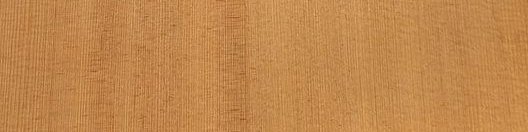 Quartersawn — cropped from the instructor’s own Sitka-topped uke. |
Sitka spruce Picea sitchensis · class kit option |
0.42 | 11.0 | ~26 | Clear, strong fundamental, wide dynamic range. The do-everything top: strums loud, fingerpicks clean. Slightly bright when new. | 0.080–0.090 in (2.0–2.3 mm) · class target |
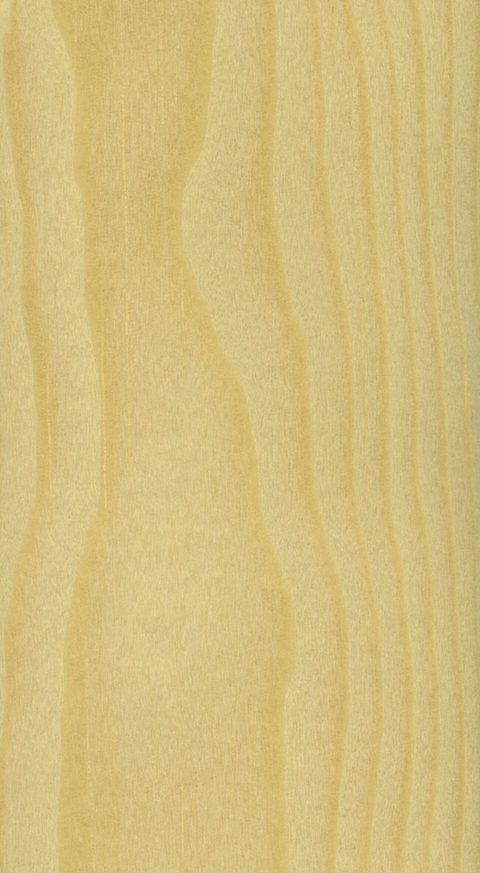 Representative spruce — quartersawn Engelmann runs tighter-grained than this. |
Engelmann spruce Picea engelmannii |
0.37 | 9.0 | ~24 | Warmer and sweeter than Sitka, very responsive to a light touch. A touch less headroom when strummed hard. | ~0.085–0.095 in (2.2–2.4 mm) typical* |
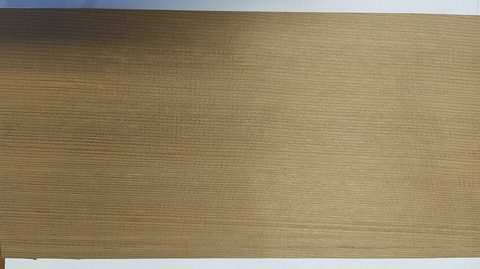 Quartersawn face — straight, fine grain. |
Western red cedar Thuja plicata |
0.37 | 7.7 | ~21 | Warm, dark, broken-in from day one. Immediate response for fingerstyle; less headroom, and it dents if you look at it firmly. | ~0.090–0.100 in (2.3–2.5 mm) typical* |
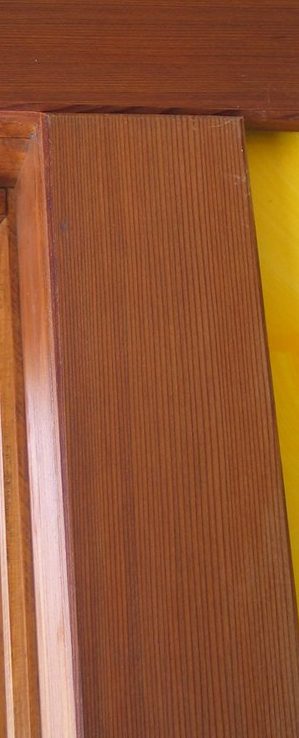 Redwood trim — warm red-brown, fine straight grain. |
Redwood Sequoia sempervirens |
0.42 | 9.2 | ~22 | Cedar-like warmth with a bit more clarity and headroom. Striking figure; can be brittle to work. | ~0.085–0.095 in (2.2–2.4 mm) typical* |
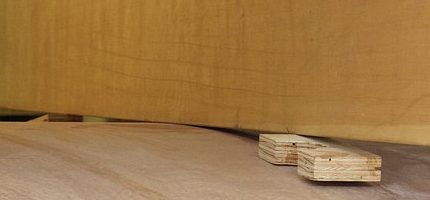 Vertical grain = quartersawn — straight, warm orange-tan lines. |
Douglas-fir Pseudotsuga menziesii |
0.53 | 13.4 | ~25 | Strong and clear with a powerful fundamental — spruce's brawny cousin. Occasionally used for tops; can sound a touch direct or "hard" next to spruce's sweetness. | ~0.080–0.090 in (2.0–2.3 mm) typical* |
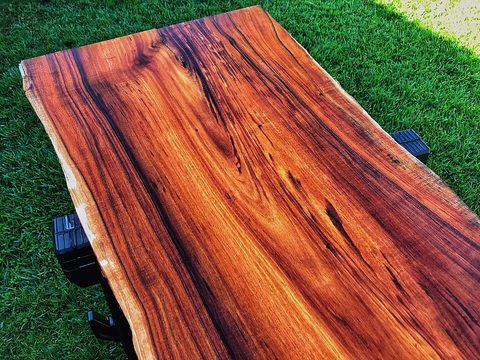 Figured koa slab — the look is half the instrument. |
Koa Acacia koa · class kit option |
0.61 | 10.8 | ~18 | The ukulele wood. Bright, sweet, focused midrange with a bell-like chime; famously "opens up" with playing. The look is half the instrument. | 0.065–0.075 in (1.65–1.9 mm) · class target |
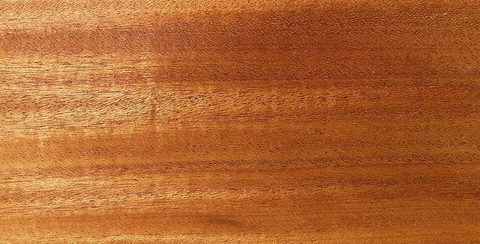 Plain-sawn face — the classic mahogany look. |
Khaya (African mahogany) Khaya spp. · class kit option |
0.52 | 9.0 | ~17 | Warm, woody, balanced — the warm blanket of the list. Softer attack than spruce, forgiving and mellow. Our kit mahogany. | 0.065–0.075 in (1.65–1.9 mm) · class target |
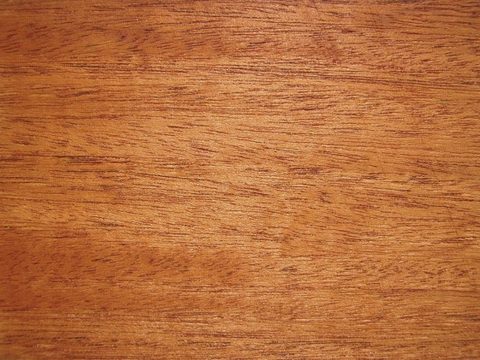 Straight, even grain — the traditional mahogany. |
Honduran mahogany Swietenia macrophylla |
0.55 | 10.1 | ~18 | Khaya's close cousin: warm and balanced with a touch more richness and sustain. The traditional mahogany-uke voice. | 0.065–0.075 in (1.65–1.9 mm) typical* |
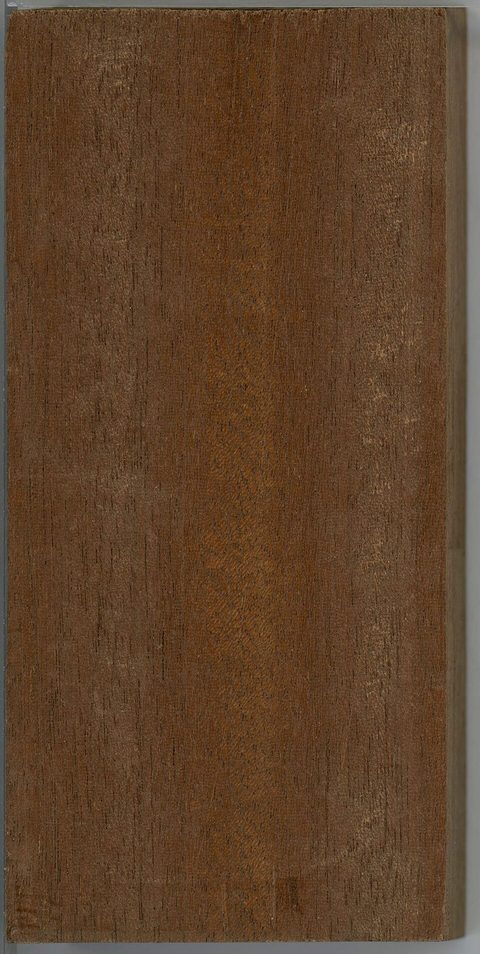 Deep red-brown; quartersawn faces show ribbon stripe. |
Sapele Entandrophragma cylindricum |
0.65 | 11.9 | ~18 | Mahogany with the treble turned up: warm low-mids plus extra shimmer and midrange definition. The ribbon-stripe figure is unmistakable; the go-to mahogany substitute. | 0.065–0.075 in (1.65–1.9 mm) typical* |
* Typical tenor range from luthier practice, not a class target — anything outside the three kit options goes through the instructor. Density and stiffness are typical published averages (USDA Forest Products Laboratory, PROTA, Wood Database compilations); individual boards vary widely. Class thickness ranges: spruce top 0.080–0.090 in, koa/khaya top 0.065–0.075 in — final values depend on the piece and instructor approval.
Wood photos, top table: Sitka top — instructor’s own instrument; Engelmann representative spruce sample — Cirad xylotheque (public domain); western red cedar — G-Lignum (CC0); redwood — "see the world ha!" via Flickr (CC BY); Douglas-fir — Dale Simonson (CC BY-SA); koa — Stephen Ondich (CC BY-SA 4.0); khaya & Honduran mahogany — Philipp Zinger (CC BY-SA 3.0); sapele — Cirad xylotheque (public domain); mahogany trio — Ian Alexander (CC BY-SA 4.0).
Sources: USDA FPL — Khaya tech sheet · USDA FPL — Sapele tech sheet · PROTA — Khaya anthotheca · Luthier's Toolbox — top-wood densities · Pacific Rim Tonewoods — sonic grading · Wikipedia — Tonewood
Telling the mahoganies apart
"Mahogany" on a lumber rack can mean three different woods. All three are in the mahogany family (Meliaceae): Honduran mahogany (Swietenia macrophylla, the "true" mahogany of the Americas), khaya (African mahogany, our kit wood), and sapele (Entandrophragma cylindricum, African, the usual substitute). The photo below shows labeled samples of all three, side by side, from Kew Gardens' wood collection.
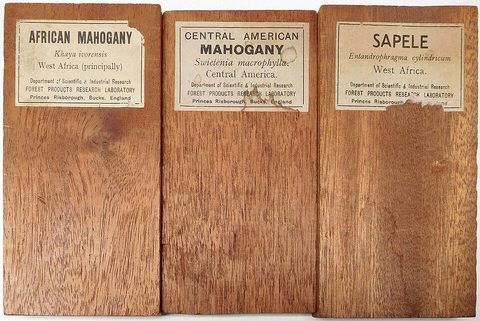
Here's how to tell them apart in the wild:
- Color. Honduran runs a rich, even reddish-brown. Khaya is usually lighter — pinkish-brown to medium brown. Sapele is the darkest of the three: deep red-brown, sometimes purplish, often with darker streaks.
- Ribbon stripe. Sapele's giveaway. On a quartersawn face, its interlocked grain catches the light in alternating bands — tilt the board and the stripes shimmer (woodworkers call it chatoyancy). Khaya can show ribbon figure too, but it's usually subtler; Honduran is typically straighter and more even-grained.
- Pores and texture. Sapele has the finest, smoothest texture; khaya is medium; Honduran shows more open, visible pores.
- Weight. Pick up a similar-sized piece of each: sapele is noticeably the heaviest (0.65 g/cm³), then Honduran (0.55), then khaya (0.52). Your hand is a decent scale.
- Scent. Freshly cut or planed sapele smells faintly of cedar (the USDA Forest Products Lab notes this); the other two are mild and unremarkable.
Practical advice: look at the quartersawn face in raking light for the ribbon stripe, heft the board, and buy instrument wood from luthier suppliers — bin labels at the general hardwood store get mixed up more often than anyone admits.
Fingerboard & bridge woods — the second table
Our class necks and fretboards arrive pre-made, so this table is for the curious — and for your next build. Honest framing first: on a ukulele, the fingerboard and bridge woods are chosen for hardness, durability, looks, and workability, not tone. A fretboard has to hold fret tangs, shrug off fingernails and string wear, and stay flat. A bridge has to anchor ~40 lb of string tension and survive the slots-and-knots bearing points without crumbling. Any tonal difference between these woods is subtle next to the top-wood choice — pick the one you like looking at and can work cleanly.
| Look | Wood | Density, g/cm³ |
Janka hardness, lbf |
Used for | Character & practical notes |
|---|---|---|---|---|---|
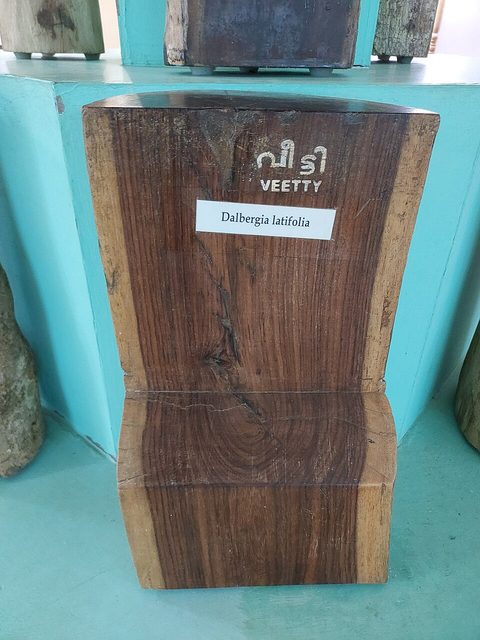 Museum sample — golden-brown to purple-brown. |
Indian rosewood Dalbergia latifolia |
0.85 | 2,440 | Fretboard, bridge | The classic. Golden-brown to deep purplish brown, darkens with age. CITES Appendix II (all rosewoods) — finished instruments are exempt, so just buy blanks from a reputable luthier supplier. Resins can bleed into finishes; seal the first coats. |
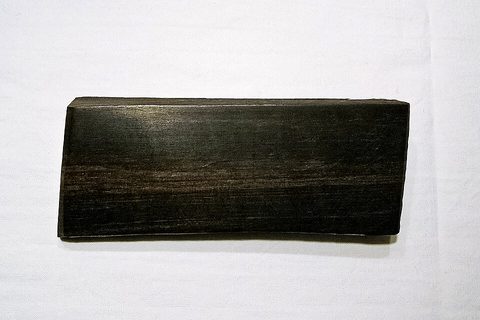 Gaboon blank — jet black, wears like iron. |
Ebony Diospyros spp. (Gaboon, Macassar) |
~1.0 | 3,220 | Fretboard, bridge | The hardest of the common choices — jet black (Gaboon) or dramatic stripes (Macassar). Wears like iron, polishes beautifully, but can be brittle and the dust is irritating: wear a mask. |
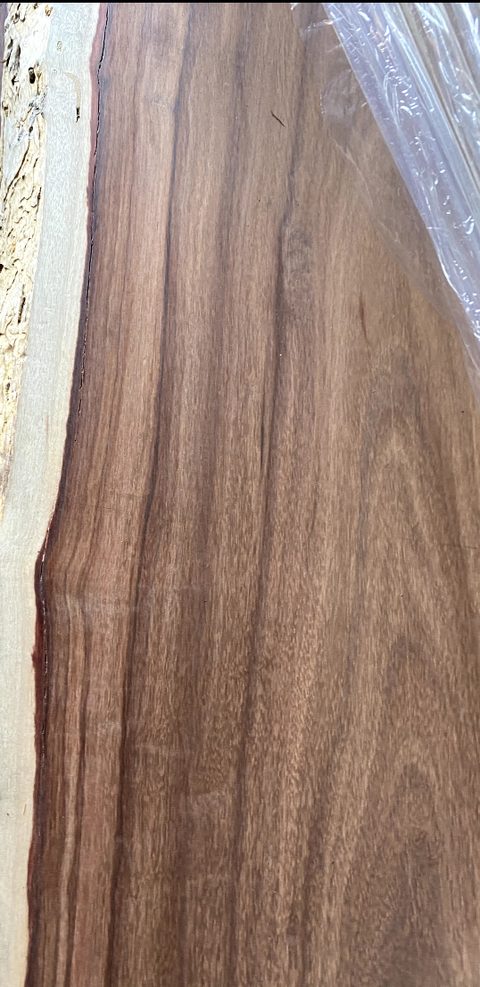 Heartwood — reddish-brown, fine grain. |
Granadillo Platymiscium yucatanum |
~1.0 | 2,450 | Fretboard, bridge | A favorite for ukulele bridges. Reddish-brown to violet with fine grain, not a true rosewood so no CITES paperwork. Dense, polishes easily, and glues without drama. |
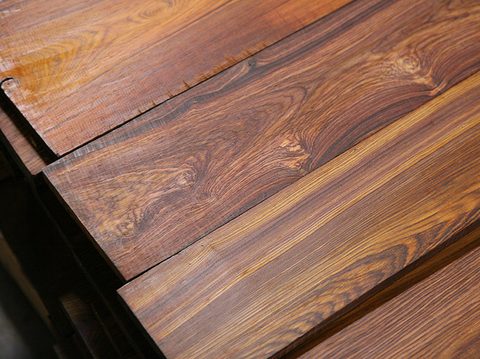 Boards — orange-to-red figure. |
Cocobolo Dalbergia retusa |
1.10 | 2,960 | Bridge, fretboard | Stunning orange-to-red figure — and very oily. Wipe glue surfaces with acetone just before gluing or joints can fail. CITES Appendix II rosewood; dust is a known sensitizer. |
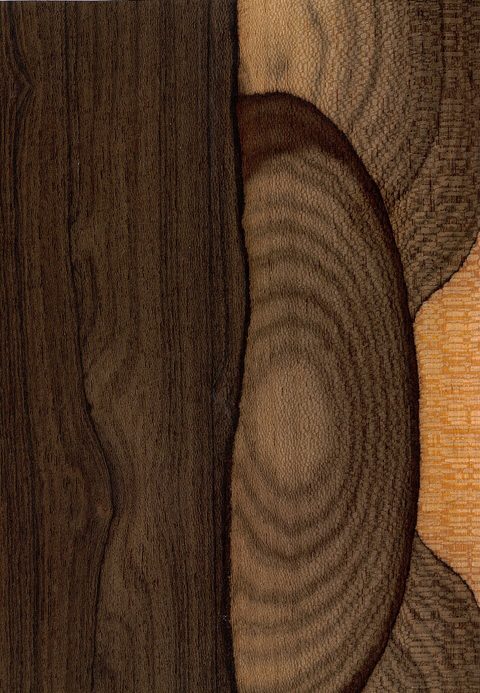 Wild spider-web figure, like nothing else. |
Ziricote Cordia dodecandra |
~0.9 | 2,200 | Fretboard, bridge | Wild spider-web figure that looks like nothing else. Hard and handsome, but can be brittle — drill pilot holes and go easy on thin sections. Not CITES-listed. |
Wood photos, second table: Indian rosewood — Vis M (CC BY-SA 4.0); ebony — W.carter (CC BY-SA 4.0); granadillo — Stephen Ondich (CC BY-SA 4.0); cocobolo — mauro halpern (CC BY 2.0); ziricote — Friedrich Böhringer (CC BY-SA 2.5).
Density and Janka hardness are typical published averages (Wood Database compilations and hardwood charts); individual boards vary. Wood Database — East Indian rosewood · Hardwood Janka chart
Common questions
Does the top wood really change how my uke sounds?
Yes — it's the biggest wood variable you've got. The top is the only plate driven directly by the strings (through the bridge), so its stiffness, weight, and damping set the instrument's basic voice: loud vs. mellow, bright vs. warm, quick vs. lingering. That said, how the top is built matters at least as much as what it's built from. A well-graduated khaya top will outperform a clumsy spruce one every time.
Which top wood should I choose for my kit?
- Spruce if you want the loudest, clearest, most versatile uke — great for strumming and group playing.
- Koa if you want the classic Hawaiian look and voice: sweet, bright, chime-like, and it audibly opens up with playing.
- Khaya if you want warm and mellow, or the friendliest price — it's forgiving to build with and sounds like autumn.
There is no wrong answer. Beginners sometimes agonize here; the build quality will matter more than the species.
Why is spruce the classic soundboard wood?
Look at the stiffness-to-weight column: spruce (and its cousins) sit at the top. A soundboard wants to be stiff enough to resist ~40 lbs of string tension without folding, yet light enough to move air freely. Spruce is nature's best compromise — which is why it's also the top wood for guitars, violins, and piano soundboards.
What does koa sound like, and why is it the ukulele wood?
Koa's numbers are unremarkable — middling stiffness-to-weight — but its voice is distinctive: focused, sweet, with a bright bell-like attack that sits beautifully under singing. It also happens to grow only in Hawaii and finish like jewelry, which sealed its reputation. Koa tops start a little tight and "open up" noticeably over the first year of playing.
What's the difference between khaya and "real" mahogany?
Khaya is real mahogany — African mahogany, the standard affordable mahogany of the guitar world for decades. Honduran (South American) mahogany is slightly denser and richer-sounding, and considerably pricier and more restricted. For a ukulele top, they rhyme: warm, woody, balanced. See "Telling the mahoganies apart" above for how to identify all three by eye.
Will my ukulele sound better as it ages?
Mostly yes, modestly. Wood fibers gradually become more compliant with vibration ("opening up"), and players consistently report instruments sounding sweeter after months of regular playing — koa especially. Time in a case does far less than time in your hands. Play it.
Does a thicker top sound duller?
Thickness is the instructor's main voicing tool, and it's powerful: a plate's stiffness rises with the cube of its thickness, so shaving 10% off the thickness drops stiffness by nearly 30%. That's why the thickness targets above are given as tight ranges, and why final thicknessing needs instructor approval. Too thick = quiet and stiff; too thin = tubby or structurally doomed.
Do the back and sides matter, or just the top?
They matter less, but they matter. Think of the top as the speaker and the back/sides as the room: they reflect energy back into the top and color the tone. Denser backs (koa) reflect crisply and add focus; lighter backs (khaya) absorb a bit more and sound warmer. Our class targets: back 0.080–0.090 in (2.0–2.3 mm), sides 0.065–0.080 in (1.65–2.0 mm), final values per instructor approval.
Solid wood vs. laminate — what's the difference?
Solid wood is one continuous piece; its stiffness and damping are the wood's own. Laminate is plywood — layers glued with grain crossed — which is stiffer, heavier, and deader acoustically, but cheap and nearly indestructible. Every uke in this class is solid wood throughout. That's a big part of why they'll sound like real instruments.
How much does the finish affect tone?
Finish is weight and damping added to a vibrating plate, so thinner is better acoustically — but unfinished wood is unprotected. The class finish schedule aims for the thinnest film that still protects the instrument. (We never pore-fill the soundboard: filler adds mass exactly where the top needs to move.)
Do strings change the tone more than wood?
Strings are the cheapest, fastest tone change in the instrument — different tensions and materials audibly shift brightness, volume, and sustain. But they can't change the top's fundamental character. Think of it this way: wood sets the voice, strings choose the microphone.
How do I keep the wood happy after the build?
Wood moves with humidity. Keep the uke around 40–55% relative humidity: in our Pacific Northwest winters, indoor heating can drop a house into the 20s, which shrinks tops and can crack them — a simple case humidifier is cheap insurance. Avoid hot cars, attics, and leaning it against the radiator.
Can I bring my own exotic top wood?
Talk to the instructor first. Exotic species often need different thickness targets, bracing tweaks, or bending approaches — all solvable, but not on build day. If you've got a board you're dreaming about, bring it early and we'll evaluate it together.
What matters most — a builder's rough ranking
When you're tempted to obsess over species, remember the rough order of influence on the finished instrument:
- Setup and geometry — action, nut and saddle fit, fretwork. Playability is tone; a great-playing uke gets played.
- Top graduation — final thickness, even and to target. The cubed lever.
- Bracing — well-fit, well-shaped, ends trimmed cleanly.
- Top species — the table above.
- Back and side wood — the room around the speaker.
- Finish — thin and even.
Strings aren't on the list because you can change them in five minutes, any time, forever. They're the exception that proves the rule: build the voice, then season to taste.