Side-bending jig (pineapple tenor)
Heat-bends the thin side wood around the pineapple body curve so it holds its shape. The side is sandwiched between spring-steel slats with the heating blanket in the stack; the whole stack drapes over the half-form while the bending shoes press it to the curve and the heat relaxes the wood. Used in Session 5.
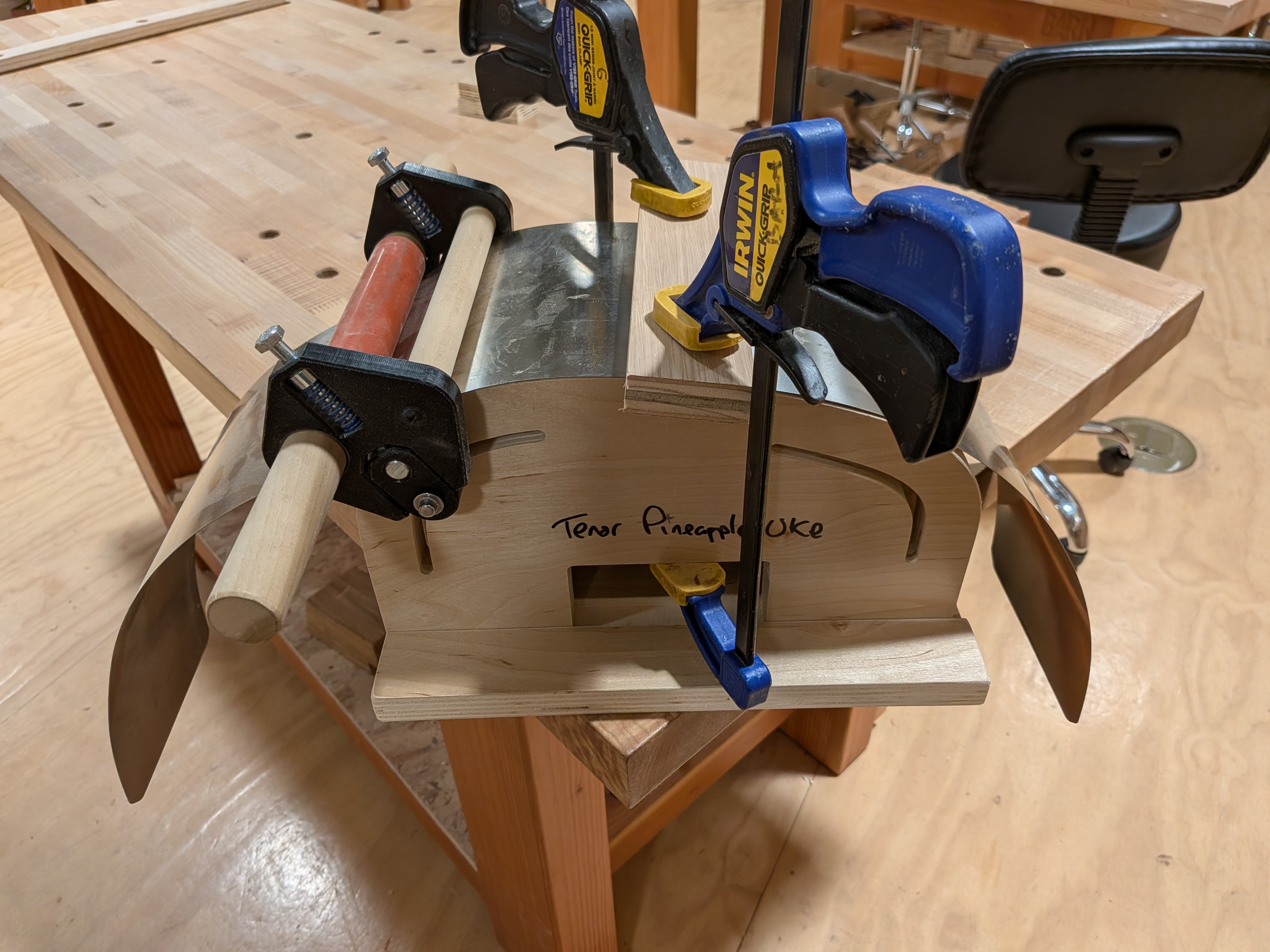
The jig as built and partially set up in the instructor's shop — slats hanging clear of the bench, shoes riding the dowel, initial clamping with the crossbar. The base-to-bench clamps and the second roller clamp are not in this shot.
Parts
- Half-form — the pineapple profile sawn from laminated plywood. The wood takes this curve.
- Spring-steel slats — the shiny metal straps. They sandwich the side, spread heat and pressure evenly, and keep the wood from scorching or kinking.
- Heating blanket — the heat source. It goes in the stack beneath the wood, per the LMI setup.
- Plywood crossbar + clamps — the initial clamping that holds the stack to the jig (the crossbar and Quick-Grips visible in the photo). Analogous to the screw-based waist clamp on the LMI bender.
- Bending shoes on dowel — the black spring brackets ride the wooden dowel and press the stack against the form. Slide them along the dowel to wherever the curve needs pressure.
- Roller clamps (2) — positioned to complete the bend once the wood reaches target temperature. The second one is not in the photo.
- Plywood base — the form's footing, clamped to the bench (base clamps not shown in the photo).
How to use it
- Clamp the plywood base to the bench so the form cannot walk.
- Lay up the stack: slat, side wood, slat — with the heating blanket beneath the wood.
- Drape the stack over the form, centered on the curve. Let the long slat and blanket ends hang down clear of the bench; that is intentional, not a problem to fix.
- Do the initial clamping: lay the plywood crossbar across the stack and clamp it down so the stack is held firmly to the jig — this is the analog of the LMI waist clamp. Slide the bending shoes along the dowel to the spots needing pressure and snug them so the stack follows the form without forcing it.
- Power the blanket and bring the wood up to target temperature.
- Once at temperature, position both roller clamps to complete the bend, working the wood progressively around the form. Never force a bend that is not ready.
- When the side follows the form all the way around, cut the heat and let everything cool in the jig so the curve sets.
- Unclamp, lift the stack off, and trim the side ends at the neck/tail block lines.
Safety
- The blanket gets hot enough to burn — do not touch it while powered, and unplug it when you are done.
- Keep water away from the blanket and its cord.
- The slats are spring steel under tension when bent — keep fingers clear of the free ends.
For koa / black acacia sides, the LMI guide recommends parchment before foil in the stack.